Brand Growth, Business Strategy 29 July 2026
Why Cultural Relevance Is Driving Growth for Global CPG Brands
Growth is shifting toward markets where cultural understanding matters as much as product innovation.
From KitKat in Japan to Dove in Brazil, leading brands are proving that cultural relevance is a measurable competitive advantage.
The next decade of CPG growth will belong to brands that empower local teams while preserving global brand consistency.
The brands that win will be the ones that feel genuinely local.
Sevendots, Milan
6 minute read
Why The Old Global Branding Playbook No Longer Works
For decades, the playbook for global consumer packaged goods companies was straightforward: develop a winning product, build a powerful brand, then roll it out across markets. The assumption was that good products speak a universal language.
That assumption no longer holds. Across the world’s fastest-growing markets, cultural relevance has quietly become one of the most consequential factors separating thriving CPG brands from struggling ones. It is no longer a soft concern for marketing teams — it is a hard driver of growth, innovation, and risk management.
Growth Is Happening Outside The West
For most large CPG companies, the center of gravity for future growth has shifted. Markets in India, Southeast Asia, Africa, Latin America, and the Middle East are where volume and momentum are building. These markets often look very different from the Western markets where global brands were built.
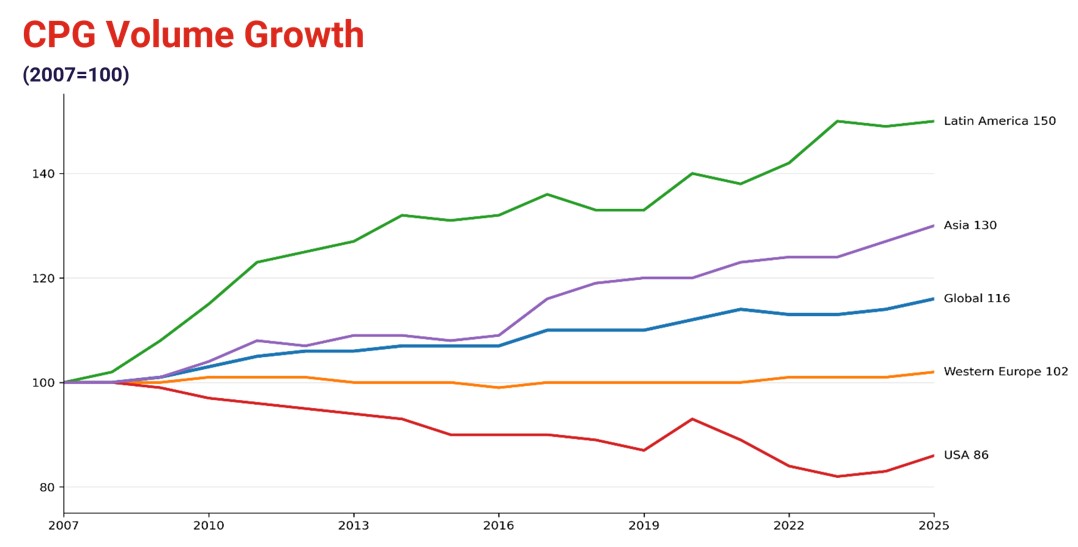
Cultural relevance is needed to develop a real global business. It goes beyond translation or localization. It means adapting products, positioning, communications, and experiences to fit local consumer behaviors, rituals, values, and aspirations while preserving a coherent global brand.
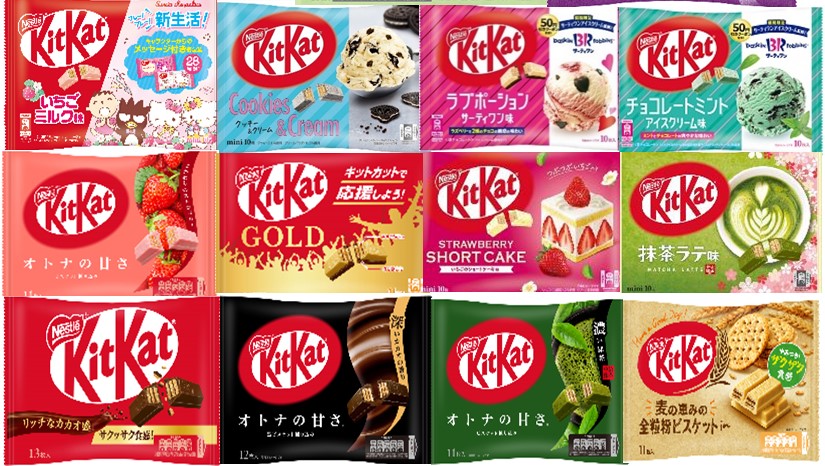
Nestlé’s management of Kit Kat in Japan tells a compelling story about localization depth. While performing modestly in many Western markets the brand has become a cultural phenomenon in Japan after the brand noticed a phonetic similarity between ‘KitKat’ and the Japanese phrase ‘Kitto Katsu,’ meaning ‘surely win.’
Rather than ignore this coincidence, Nestlé leaned into it, positioning KitKat as a good-luck gift for students ahead of exams. The brand then extended the concept through 300 variants and regional flavors — matcha, sakura, wasabi, sake, sweet potato — many exclusive to specific prefectures and sold as premium gifts.
As a result, Japan became one of KitKat’s largest and most profitable markets in the world, built almost entirely on cultural attentiveness.
Consumer Expectations Differ
At its core, the change is simple: people want brands that understand them. Not just their purchasing habits, but their lives, their rituals, their humor, their values, their sense of identity.
A product that resonates deeply in one market can fall flat or even offend in another if it ignores local tastes, traditions, health beliefs, beauty standards, or shopping behaviors.
Coca-Cola builds campaigns around local national holidays rather than exporting a single global moment, generating some of its strongest regional engagement figures with dedicated Ramadan campaigns across the Middle East and Africa, or celebrating Chinese New Year.
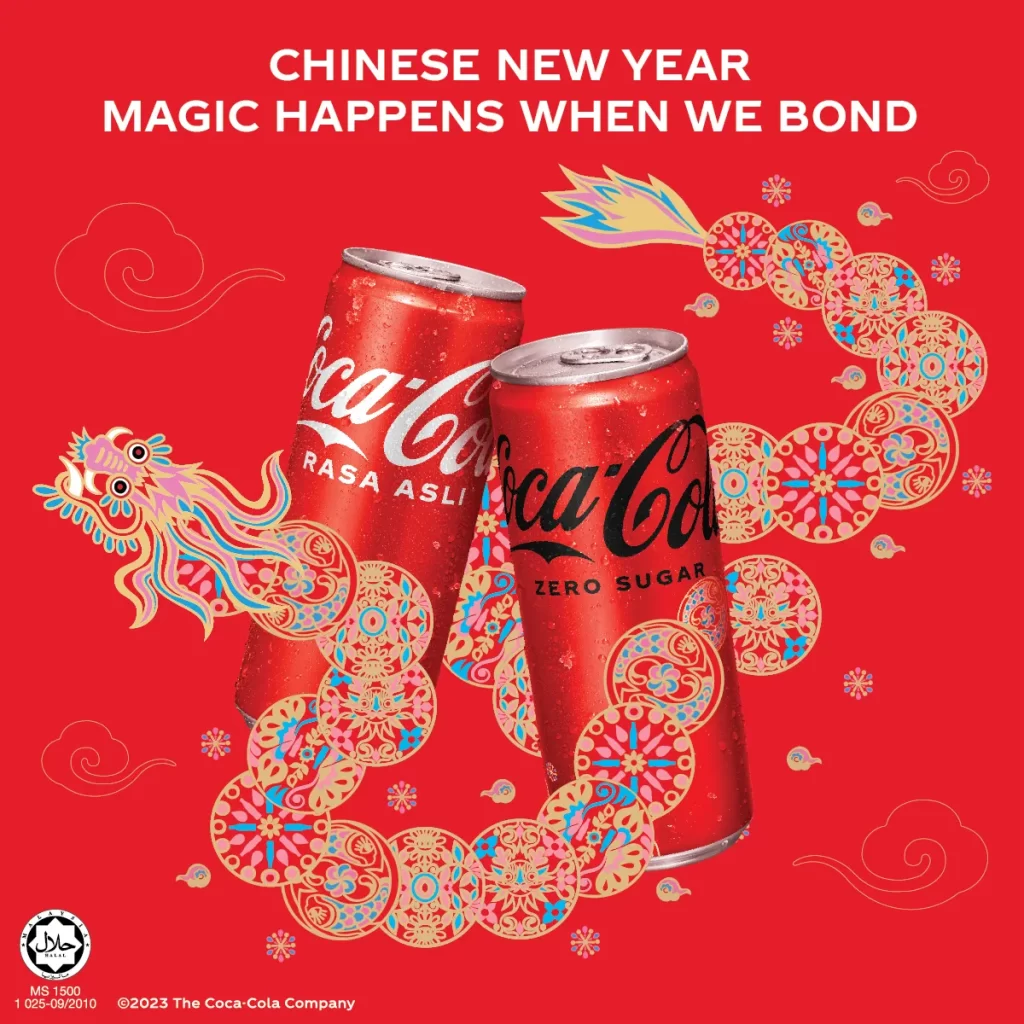

Localization has moved from a nice-to-have to a trust and connection mechanism. Consumers increasingly reward brands that feel genuinely present in their culture — and walk away from those that feel foreign, generic, or tone-deaf.
Identity and Values Increasingly Impact Purchasing Decisions
Purchasing decisions increasingly reflect personal identity and values. Brands are evaluated not just on product quality but on whether they represent inclusion, sustainability, local identity, and authentic community connection.
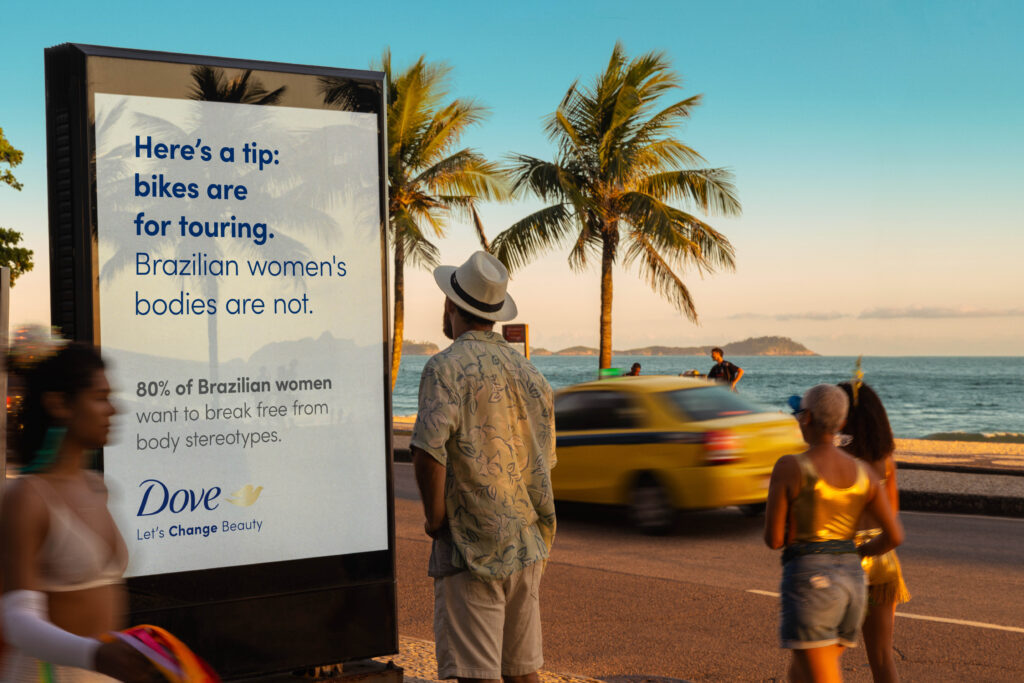
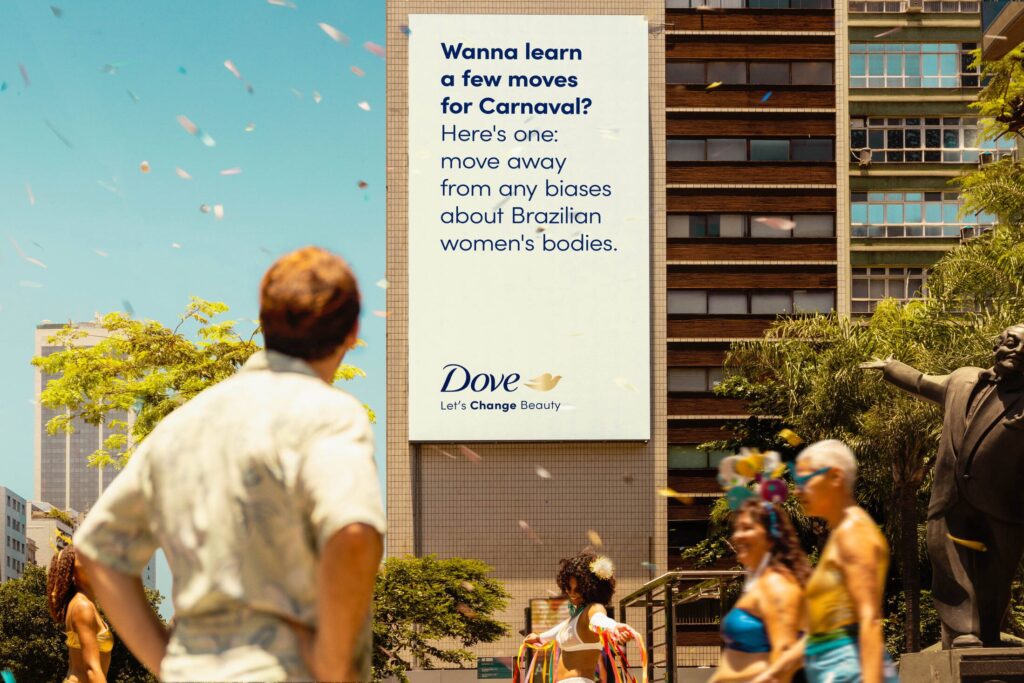
Dove’s ‘Real Beauty’ campaign remains one of the most studied examples of a brand successfully aligning with shifting cultural values around body image and representation. Critically, the campaign has been adapted and re-expressed in different markets rather than applied uniformly.
In Brazil, where beauty standards and cultural conversations differ from those in North America or Europe, Dove’s messaging has been calibrated to local contexts. The consistency is in the underlying purpose, not in the creative execution.
A global CPG brand that feels distant, corporate, or indifferent to local culture faces a structural disadvantage against brands — even smaller, local ones — that feel genuinely aligned with how consumers see themselves. Authenticity has become a competitive asset, and cultural relevance is a large part of what makes a brand feel authentic.
Social Media Has Raised the Stakes
The digital environment amplifies everything. A culturally misjudged campaign no longer just fails quietly in one market – it can generate backlash that travels instantly across borders.
Consumers notice when brands stereotype cultures, approach traditions carelessly, or fail to represent communities authentically. Criticism spreads fast. But the reverse is equally true: brands that participate meaningfully and intelligently in local culture can earn loyalty and reach with remarkable speed.
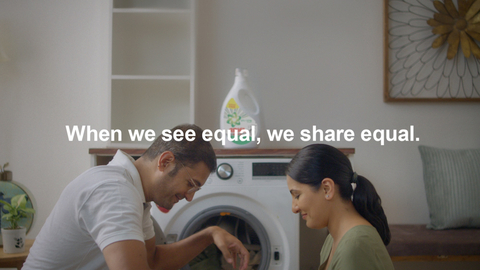
Procter & Gamble’s Ariel ‘Share the Load’ campaign in India is one of the most cited examples of a brand successfully engaging with a deeply rooted cultural norm. The campaign challenged the expectation that laundry is solely a woman’s responsibility — a sensitive topic in Indian households — and did so in a way that felt authentic rather than insensitive. It delivered significant commercial results while sparking genuine social conversation.
The dynamics of social media create a significant asymmetry of risk and reward. Cultural intelligence is no longer just about avoiding mistakes — it is an active lever for building influence.
Fragmented Ecosystems Require Local Fluency
Global CPG companies can no longer rely on a uniform go-to-market approach. The retail and media ecosystems consumers engage with are increasingly distinct by geography.
TikTok commerce dominates in parts of Asia. WhatsApp-driven commerce shapes purchasing in Latin America and Africa.
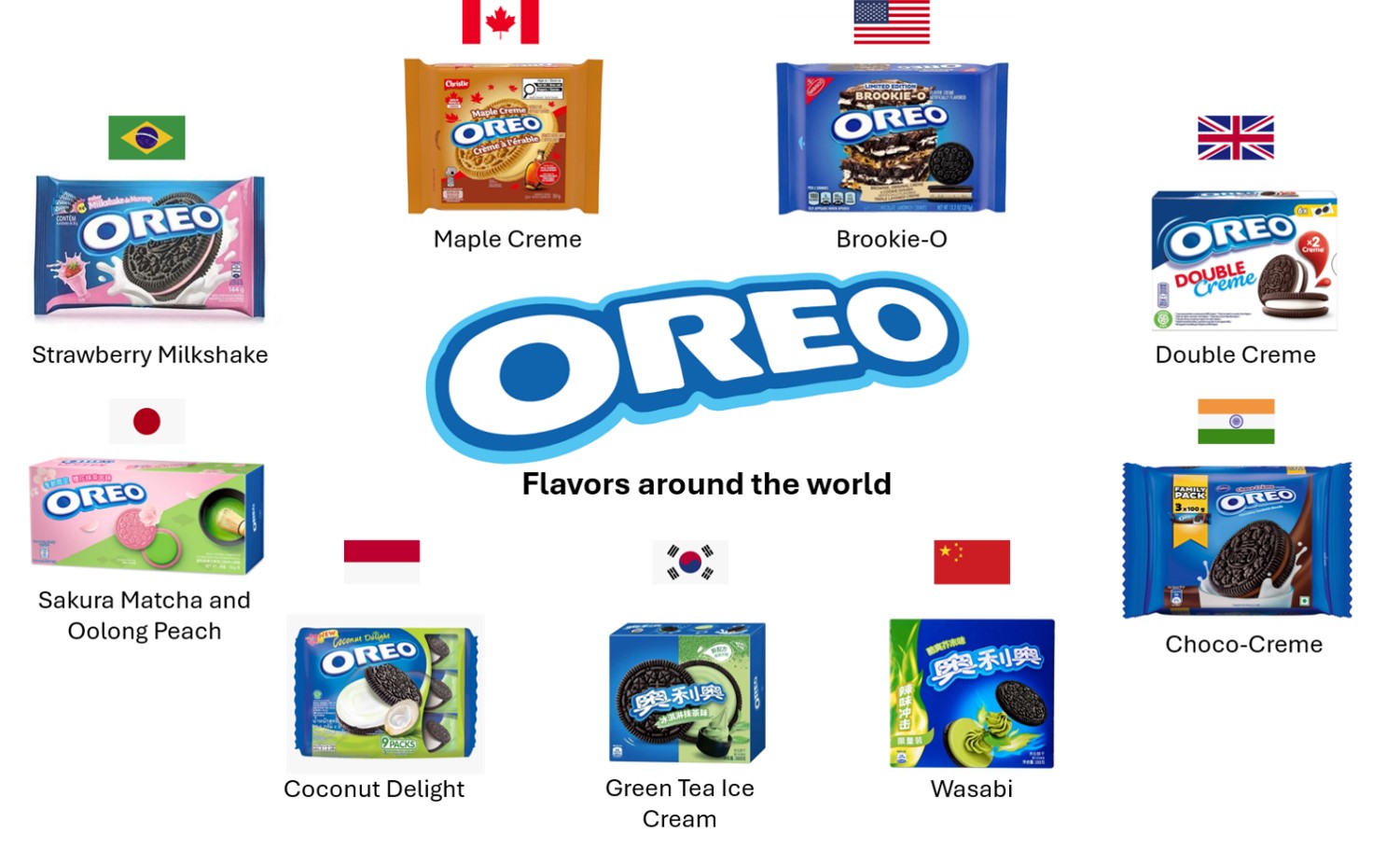
Mondelez has applied a locally sensitive logic with Oreo, which might appear to be the quintessential standardized global product. Yet the company has introduced green tea, matcha cream, hot chicken wing, and watermelon flavor variants in China; birthday cake and churro variants in Latin America; and mango and paan (betel leaf) variants in India.
Competing effectively requires locally relevant storytelling and activation — not just translated global content.
The Business Value of Cultural Relevance
Beyond immediate sales, cultural relevance builds the kind of brand equity that sustains business through economic cycles. Culturally resonant brands earn stronger emotional loyalty, higher repeat purchase rates, and more robust word-of-mouth advocacy. They are also more resilient — consumers are quicker to switch brands today, and price alone rarely holds loyalty when emotional connection is absent.
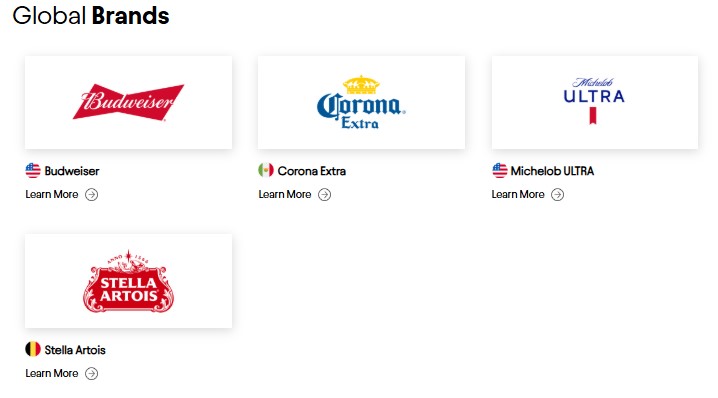
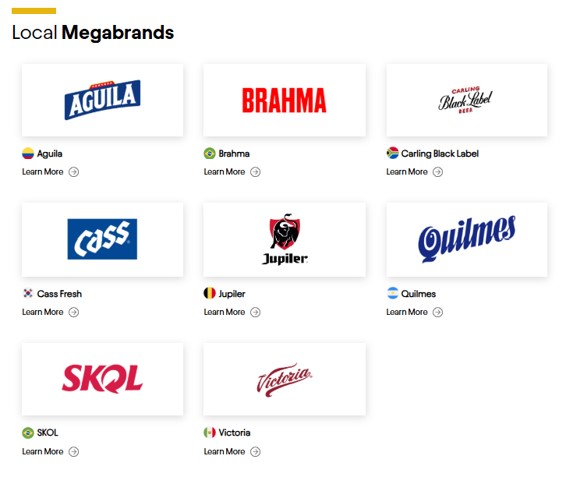
AB InBev is a useful example of how to balance global brand identity with local cultural investment. The company’s Budweiser has built a strong presence in China through consistent sponsorship of locally significant cultural moments and sporting events. Simultaneously, AB InBev has retained and grown local beer brands that carry deep regional identity in their home markets, recognizing that these brands carry authenticity that a global import cannot replicate.
The portfolio strategy — global flagship plus local champions — reflects an understanding that cultural resonance operates at multiple levels.
The strategic implication is significant. The most successful global CPG companies are shifting their operating model away from ‘global brand with local distribution’ toward something more nuanced: a globally consistent brand purpose, expressed through locally meaningful experiences.
What The Best Brands Have In Common
The most effective examples share a common structural feature: the local teams have genuine authority. Nestlé Japan had the autonomy to pursue the KitKat gifting concept even when it looked unconventional from a global brand management perspective. P&G gave its Indian team the space to develop the Ariel ‘Share the Load’ insight and campaign rather than adapting a global brief. Mondelez has transformed a simple product into a consistent carrier of local relevance as defined by local teams.
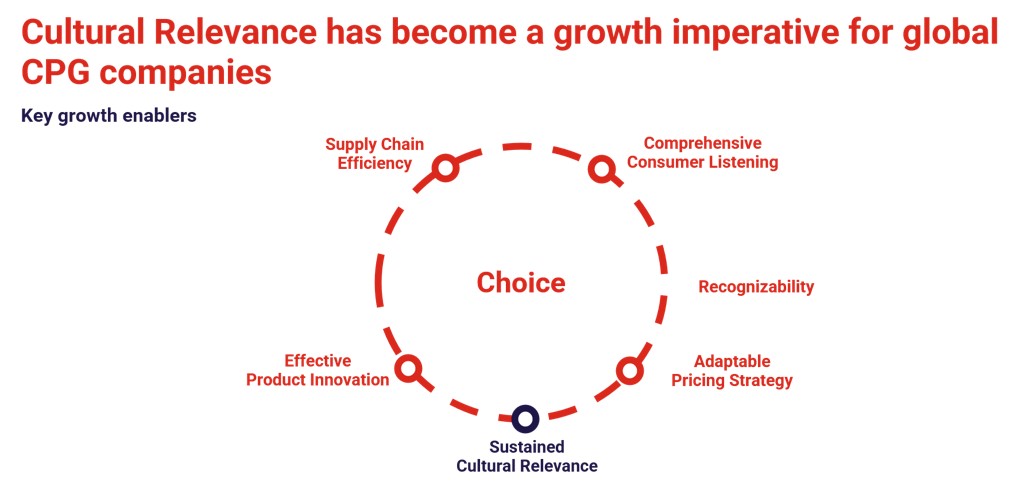
Cultural relevance, in short, has become a capability; one that sits alongside supply chain efficiency, pricing strategy, and product innovation as a core driver of competitive advantage for global CPG companies.
The brands that will lead in the next decade of global CPG growth are not simply those with the biggest budgets or the broadest distribution.
They are the ones that have learned to be genuinely at home in the markets they serve.
How Sevendots Can Support
At Sevendots we work with brand teams to transform positioning from a static statement into a practical growth system. Through our global network of seasoned professionals, we help CPG companies find the right balance for their brands between global consistency and local relevance by objectively combining extensive business knowledge with on the ground local understanding.
We have a unique ability to collect, combine and distil the richness of a large variety of knowledge sources into simple, effective and actionable frames, enhancing understanding on how to create mutual value for companies and consumers at all levels in a sustainable and differentiated way over the long term.