Brand Growth, Business Strategy 28 January 2026
Small Positive Experiences Build Big Businesses
Why Growth in the Experience Economy Is Built One Moment at a Time
In the experience economy, growth is rarely won through spectacular moments alone.
Brands are built, and broken, through thousands of small, often invisible interactions that
shape trust, habit, and memory over time.
Leaders who understand, protect, and measure these moments create durable growth that
scales.
Sevendots, San Francisco
11 minute read
The Experience Economy: Why Growth Is Increasingly Driven by Experience
We are living in an experience economy! Post-COVID, this is no longer a cultural talking point but a structural shift. Younger generations, and increasingly everyone else, value how life feels as much as what they buy. Value no longer resides only in the physical product; it emerges from the product plus the lived experience around it: discovering it, buying it, using it, servicing it, returning it, talking about it.
Brands are no longer “brick-and-mortar” or “digital”. They must be both at the same time, and customers expect coherence across environments. A great product with a broken experience is not a premium brand. It is a fragile one.
The scale of this shift is visible in where attention and investment are flowing. Immersive entertainment, a market that epitomizes value experiences, is rapidly growing with a CAGR of 23% annually. The global experience economy is expected to reach $8.2T market size by 2028.
Concerts and live events have exploded in parallel. Artists like Taylor Swift, Karol G, and Bad Bunny are not simply touring; they are creating global, emotionally charged experiences that people plan their lives around.
Yet here is the paradox: while spectacular experiences raise the ceiling, most businesses are built, and broken, by much smaller moments.
To manage growth in the experience economy, leaders need a clearer way to think about experiences.
A Framework for Experiences That Actually Drives Brand Growth
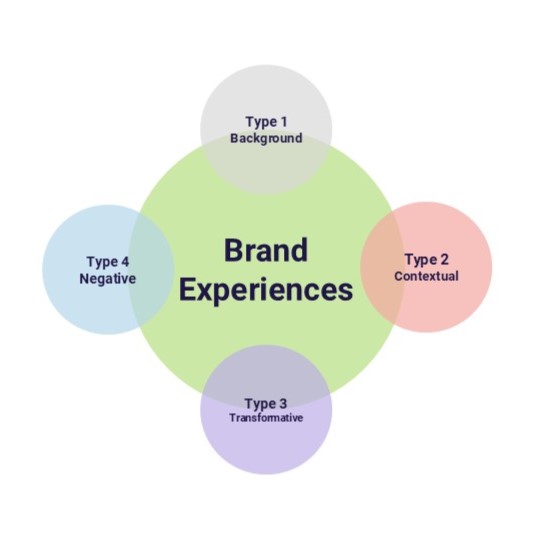
Not all experiences play the same role in memory, behavior, or brand equity. In practice, they fall into four distinct types.
There are four types of brand experiences that drive brand growth: Background, Contextual, Transformative, and Negative Micro-Experiences.
Type 1: Background Experiences
Unconscious, System-1 reinforcement that builds mental availability
These experiences operate below conscious awareness. They do not ask to be evaluated; they quietly shape associations through repetition, familiarity, and ease. This is System 1 at work, the fast, intuitive layer of decision-making described by Daniel Kahneman.
People are not thinking, “This brand is doing a great job” instead their brains are simply learning in auto-mode: “this feels easy, familiar, safe”.
This is why Byron Sharp’s How Brands Grow remains so relevant. Brands grow by increasing penetration, reinforced by mental and physical availability, being easy to think of and easy to buy. Background experiences are the repetition engine that builds those associations without conscious effort. Associations create familiarity, and those brands that are related to the task become the category norm. Sevendots Growth Series on Penetration is great material to learn on this.
CPG example: Coca-Cola’s strength lies in its consistency, evident in its packaging, taste, rituals, and visual cues. The brand’s iconic assets, such as the curved bottle, the red color, and even Santa during the holiday season, evoke the brand and reinforce the same mental structure. Over time, this consistency makes Coca-Cola an effortless choice, especially when evoking the brand unconsciously during drinking occasions, and it is “within arm’s reach of desire” thanks to its distribution strategy that ensures physical availability.


Coca-Cola is among the perennial penetration growth brands that have consistently maintained their market positions by reinvesting to remain culturally relevant and evolving their offerings to reach diverse audiences while retaining loyal customers. In essence, they focus on expanding penetration by attracting and delighting new consumers across various occasions and locations.
Non-CPG example: Amazon’s dominance is built on unconscious fluency: defaults, stored preferences, predictable delivery, and the quiet removal of friction at every step. Over time, these small, repeated, unconscious experiences train behavior and compress decision-making until choice all but disappear. Brands become habits not when they are loved, but when they no longer require thought.

Type 2: Contextual Experiences
Small in size, disproportionately memorable because context amplifies emotion
Some experiences are still small, but they occur when people are emotionally exposed: socially visible moments, transitions, vulnerability, stress, or identity formation. Context amplifies meaning, and memory formation spikes.
These experiences are critical to brands, they create long-lasting associations. However, most brands fail to develop effective strategies to find this Venn diagram of the memorable occasion and the right benefit to offer in that moment. Traditional research methods also fail to learn, a limitation we will touch on in an upcoming chapter.
CPG example: The Always School Program is a powerful illustration, as it is done at the point-of-market-entry, when associations and the category prototypes are being formed. Also, puberty is a moment of deep emotional sensitivity, identity formation, and long-term memory. Remembering the first period is like remembering the first fill-the-blank important moment. Because this life stage is universal and recurring across generations, the experience creates durable brand associations. By combining education, support, and product sampling directly in schools, Always shows up at a moment that matters, at a formative stage of life. The product itself is not the story; the context is. You want your brand to be there when consumers are initiating in the category, and even coffee is doing this, with Nescafe in Japan having a program to get young consumers initiated into the category.


Non-CPG example: Uber’s most meaningful experiences aren’t just average rides. They’re late-night trips, unfamiliar cities, and moments of vulnerability. Imagine standing in a foreign third-world country, where nothing feels familiar. But then, the Uber arrives as expected, and it directs you by your name. A smooth pickup creates a sense of relief and trust, while a failure creates a sharp aversion. The interaction is small, but the context makes it memorable. Context transforms micro-experiences into anchors.
Brands that develop the ability to effectively leverage these brief, yet impactful experiences will undoubtedly gain a competitive advantage.
Type 3: Transformative Experiences
Rare moments that reset expectations for everyone
Transformative experiences do not happen often, but when they do, they redefine what people believe is possible.
At the beginning of this article we touched on the immersive experiences market that is booming. As I go back and self reflect on what were those experience moments that made me WOW, they are not that frequent, and certainly they were not cheap.
My parents took me to the 1992 World Expo, where I experienced the first time a 3D IMAX movie with glasses and a multi-sensory water drops and shaken seats, like a “fourth D” experience. It was an awe-inspiring experience. However, for many decades, everything felt repetitive, with Disney Park rides and theaters featuring the same “4D trick” over and over.
Then, the Sphere in Las Vegas arrived. It took over 30 years of my life to experience another awe-inspiring experience of the same caliber. Those who have been to the Sphere know what I mean. Venues like this represent a new threshold, scale, immersion, and presence, combining them in a way that transforms the experience itself into the destination.
The live entertainment is also booming. Global tours by artists like Taylor Swift, Karol G, and Bad Bunny have become cultural phenomena and massive economic engines. People travel, plan, and save for these experiences. Brands want to be part of it. Cities get their economy boosted when these artists are in town. They are no longer ancillary to life; they are central to it.
CPG example: Pet care shows how CPG brands respond when expectations rise. Companies like Mars have expanded beyond food into veterinary care, diagnostics, monitoring, and wellness ecosystems. The brand is no longer confined to a purchase moment; it participates in the lived experience of care, health, and companionship. It is part of the crucial life moments of your pet, and that goes way beyond the nutrition.


Still in CPG but more on the emotional WOW side, the “Thank You Mom” campaign from P&G Olympics sponsorship keeps the top-ranked position among the best sports advertising ever (at least in my own scoreboard!). The effort of being a parent of an athlete is humongous, and what a huge peak moment with your kid at the Olympics. Dream comes true.
Transformative experiences don’t directly drive daily sales, but they fundamentally alter the criteria for evaluating all other experiences. However, most brands can’t afford to participate in these experiences, as these big iconic events are typically beyond their financial reach. Even when they can afford to participate, it is often after making significant financial sacrifices to do so, and very unlikely to yield a better return.
Type 4: Negative Micro-Experiences
Small failure moments that can unravel trust instantly
Negative micro-experiences are the most underestimated force in brand erosion. They are brief, but emotionally sharp, because they represent promise breaches.
The asymmetry is brutal: years of positive reinforcement can be questioned in seconds.
CPG example: Everyday household accidents illustrate this perfectly. A diaper that leaks at night. Toilet paper that is not strong enough to avoid poke-through, these are not dramatic failures, but they occur in moments of discomfort, embarrassment, or stress. The decision to switch or to try something new is rarely analytical, it is immediate and protective.


Non-CPG example: Airline disruptions remain the canonical case. One missed connection handled poorly can outweigh dozens of smooth flights. The negative moment dominates memory because it occurs under loss of control and time pressure.
Negative micro-experiences do not accumulate slowly. They strike hard. And the leaky bucket of losing consumers becomes inevitable. But in this case is not because of lack of mental or physical availability, this consumer will be harder to recuperate.
Visa: One Brand, All Four Experience Types Illustrated
Visa is a ubiquitous brand in our world; its logo is everywhere you need to pay. It is also rich on experiences and occasions, as in any given day there are several mini experiences where there is the choice to use it. This makes it perfect to illustrate how all four experience types coexist within one ecosystem, from invisible everyday reliability to emotionally charged travel moments, to global events like the FIFA World Cup.
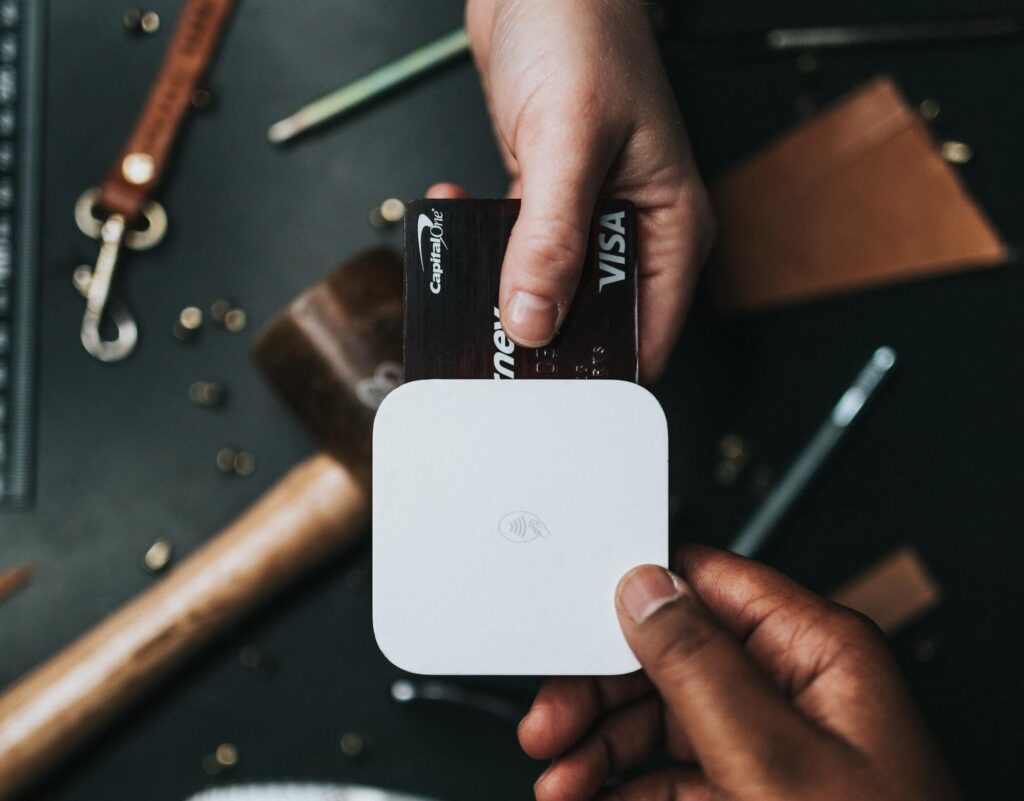
Visa’s core equity is built unconsciously. The logo at checkout, the expectation of acceptance, the absence of friction; these repeated cues reinforce cognitive ease. People do not actively choose Visa; Visa is already chosen.


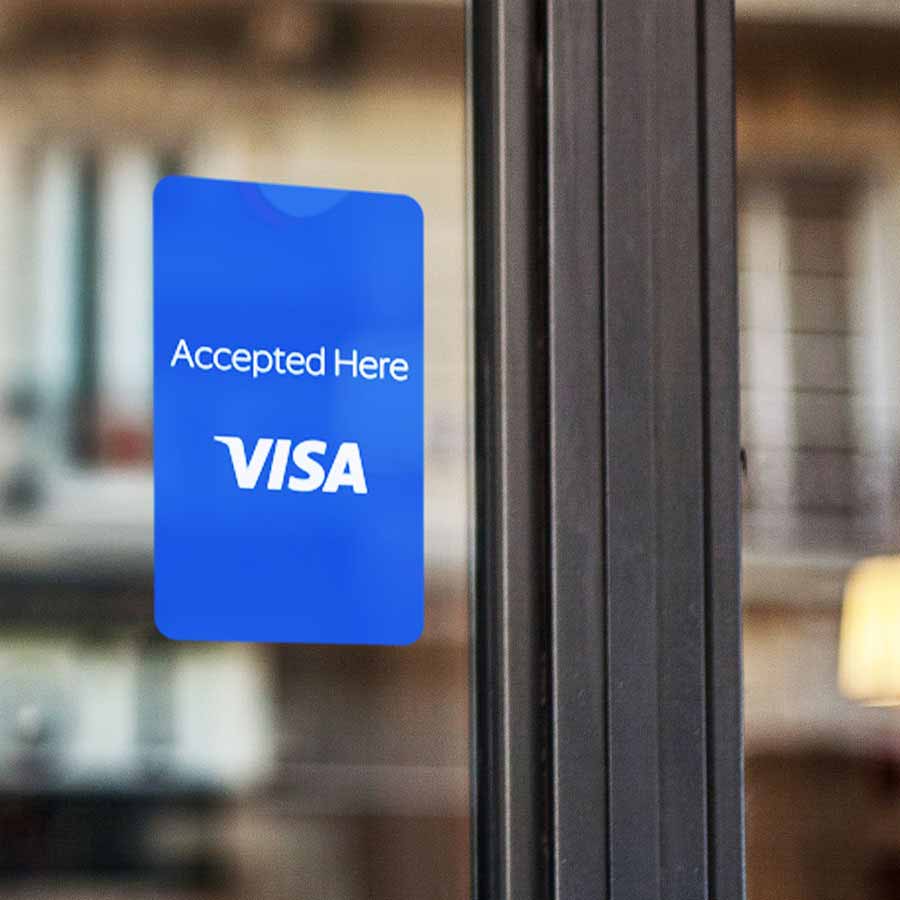
When traveling far from home, in unfamiliar countries or languages, seeing “Visa accepted” creates immediate relief. Picture yourself in the middle of the Caribbean Sea, and a ice-cream over the sea seller appears out of nowhere. And they accept Visa! The payment itself is small, but the context, uncertainty, dependency, vulnerability, makes the experience emotionally significant. Visa shifts from invisible infrastructure to reassurance.
Visa’s role in global events, particularly the upcoming FIFA World Cup, moves the brand beyond transactions into orchestration. The success of recent pre-sale ticket lotteries, enabled by Visa access and infrastructure, turned payment capability into the opportunity to be part of the biggest fan passion experience in the world. These moments do not drive everyday usage, but they relate the brand with passion and get to reach levels that any brand would envy. Of course, this is at an extremely exorbitant cost too.

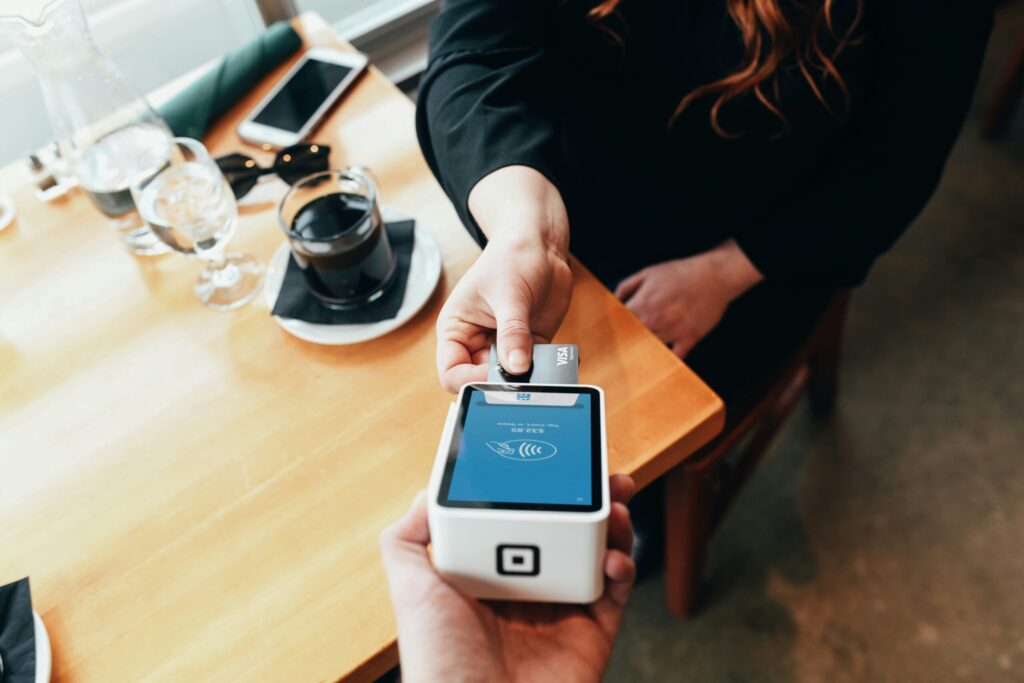
This is where Visa’s strength can become its vulnerability. A card decline moment, especially it is for no clear reason, are the mirror image of Visa’s strength but towards the frustration. It is the biggest negative equity driver the brand has. Because the brand promise is reliability, a single failure in a public or stressful context can disproportionately damage trust and trigger abrupt behavioral change. People will stop using a card because of this embarrassment.
Visa demonstrates a central truth: brands are built, and broken, by how all four experience types interact over time. Mainstream brands should find inspiration from this ecosystem approach.
Measuring Experience When Experience Is Human – Ethnography at scale, end-to-end, while life is happening
If experiences are now central to value creation, measurement should be one of the most advanced capabilities inside organizations. Instead, it is often the most misaligned. The issue is not lack of data. It is a disconnect between how experiences are lived and how they are measured.
Daniel Kahneman’s work in Thinking, Fast and Slow explains the structural problem. Human experience is lived largely through System 1: fast, intuitive, emotional, and deeply contextual. Most research tools, however, capture System 2 rationalization: what people can explain after the fact. By the time we ask, the experience has already been edited by memory. Peaks dominate. Endings distort. Context collapses.
What remains is a coherent story, but not necessarily the truth of what shaped behavior. This makes many traditional surveys and CX trackers fundamentally misaligned. They are recall-based, directed, and episodic, designed to collect opinions rather than observe lived experience.
The solution is not better questions.
It is ethnography at scale, designed to capture experience in context, as it unfolds, across the full end-to-end journey.
This means following people, not touchpoints. Experiences cascade: discovery shapes expectation; checkout shapes trust; service shapes identity; failure shapes memory.
Measurement must move with the human across these moments, not audit isolated stations.
It also means more system 1 experiences and beliefs to predict future behavior, while removing the System 2 biases that have plagued traditional Qual and quant methods for decades. Better capturing signals close to the moment of truth and better predicting capabilities are critical.
Two people can go through the same designed journey and live entirely different experiences depending on stress, time pressure, social visibility, or vulnerability. Ethically “ear-dropping” while life is happening, when emotion and decision pressure are real, not reconstructed.
This approach is how the most valuable insights emerge. The strongest signals rarely sit in the average. They surface at the edges: unexpected uses, improvised workarounds, fringe behaviors that spread because they solve a real problem, and breakdown moments that reveal the true promise the brand is being held to.
In an experience economy, insight cannot be periodic or abstract. It must be continuous, end-to-end, and human-centered. And they must influence our foresight vs. being backward looking.
The research industry needs new ways to listen to life in motion.
Wrap Up: A Strategic Imperative
The experience economy has raised the stakes. Transformative moments, from immersive venues to global concerts, are redefining what “great” feels like. But the brands that endure are not only those that create spectacle. They are the ones that understand, protect, and refine the small human moments that happen every day.
Small positive experiences still build big businesses.
But only if leaders take them seriously enough to observe them, test them, and measure them in ways that reflect how people actually live.
This requires humility. It requires letting go of some comfortable metrics, keeping just the most critical ones. But above all, it requires the courage to pay attention to moments that do not fit neatly into existing models.
Because growth does not happen in dashboards. It happens in lived experience, one moment at a time.
At Sevendots, we help brands win by mastering the small touchpoints that shape experience and behavior every day. Using our Moment10 research ecosystem, we are able to observe real moments in context to uncover how brands are built, or broken, one interaction at a time. Our senior team partners closely with leadership to turn these insights into clear, actionable strategies that drive sustainable growth.