Brand Growth, Portfolio Management 30 October 2026
Making Brands Matter: Winning Across Consumption Occasions
Consumers become more fluid in their choices. Understanding how brands can create relevance across different moments is increasingly important.
Consumers can be value-driven in one situation and premium-seeking in another, challenging traditional assumptions about brand loyalty and willingness to pay.
For CPG companies, the opportunity lies in connecting meaningful brand differentiation with the occasions that matter, then translating this into stronger portfolios and growth.
Sevendots, Rome
7 minute read
The changing economics of brand choice
Why would a consumer happily buy private-label detergent for everyday washing, yet pay a substantial premium for a specialist product to protect a favorite cashmere sweater?
Why might the same shopper be indifferent to the brand of an everyday chocolate snack but carefully select specific brand when wanting to profusely indulge?
The explanation is hardly new to experienced marketers. Different consumption occasions create different needs, expectations and purchasing priorities. Understanding occasions, need states and demand spaces has been part of the CPG marketing playbook for decades. Leading manufacturers have invested significantly in mapping these opportunities and designing products and portfolios around them.
What deserves renewed attention is not the existence of different occasions, but how brands can demonstrate their relevance and differentiation in an increasingly fluid marketplace.
As we explored in our recent article, It’s All Gone Blurred: The New Reality of CPG Growth, many traditional boundaries shaping the CPG industry are becoming less distinct. Consumers move between channels, price tiers, brands and even product categories with growing flexibility.
And this fluidity is increasingly evident in how consumers allocate their spending.
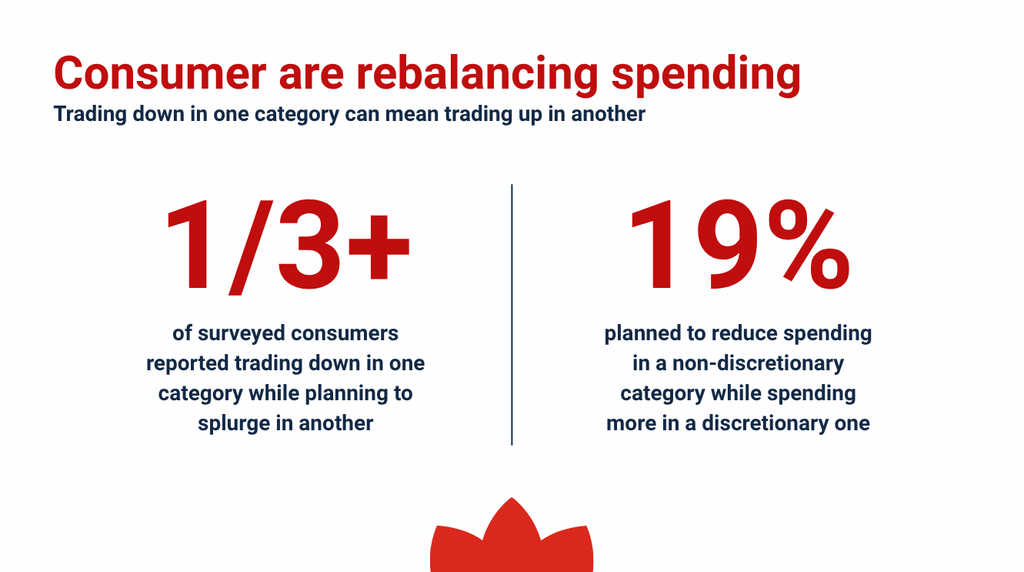
According to McKinsey’s State of the Consumer 2025, more than one-third of surveyed consumers reported trading down in one category while planning to splurge in another. Furthermore, 19% planned to reduce spending in a nondiscretionary category while spending more in a discretionary one.
Meanwhile, NIQ’s Finding Harmony on the Shelf report found that 58% of global consumers said they were buying more brands across more categories than ever before, while 68% considered private-label products good alternatives to manufacturer brands.
These findings suggest that established brand preferences can no longer be taken for granted. Consumers are increasingly open to evaluating alternatives, balancing functional performance, perceived value, emotional benefits and affordability.
Importantly, this does not mean that brands are becoming irrelevant. It means brands must give consumers a compelling reason to choose them and build strong associations with the occasions in which their benefits are relevant.
The same consumer. Different needs for brand differentiation.
A few known examples of how consumers chose based on different occasions.
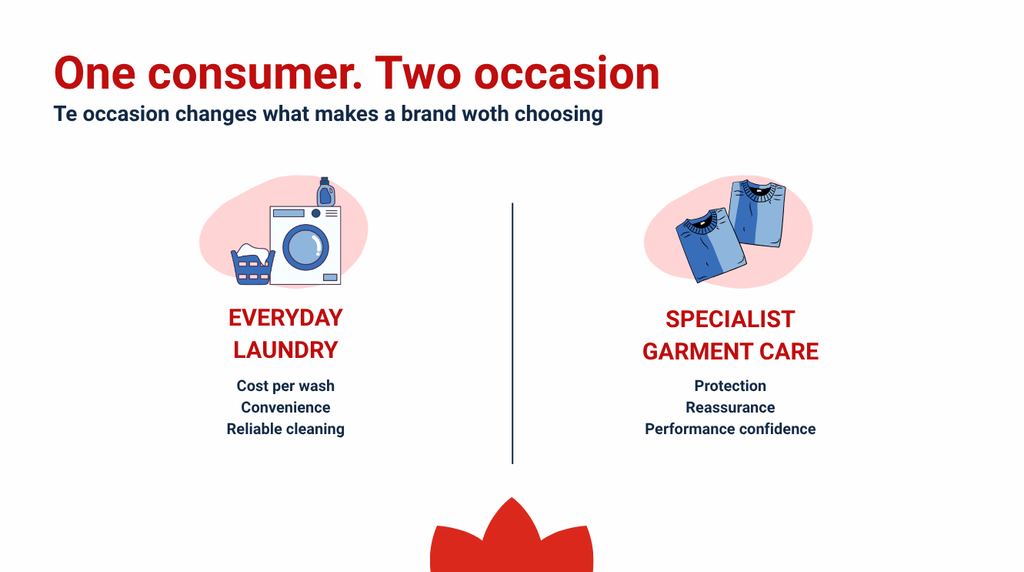
Consider the laundry category. For a routine weekly wash, a consumer may be perfectly satisfied with an affordable private-label detergent. Cleaning performance, convenience and cost per wash are the primary considerations. But when caring for an expensive silk blouse or removing a difficult stain from a favorite garment, the same consumer may seek a specialist branded solution.
The difference is not necessarily a change in purchasing power or brand affinity. It is a change in the consequences of making the wrong choice. Trust, reassurance and confidence in product performance suddenly become much more valuable.
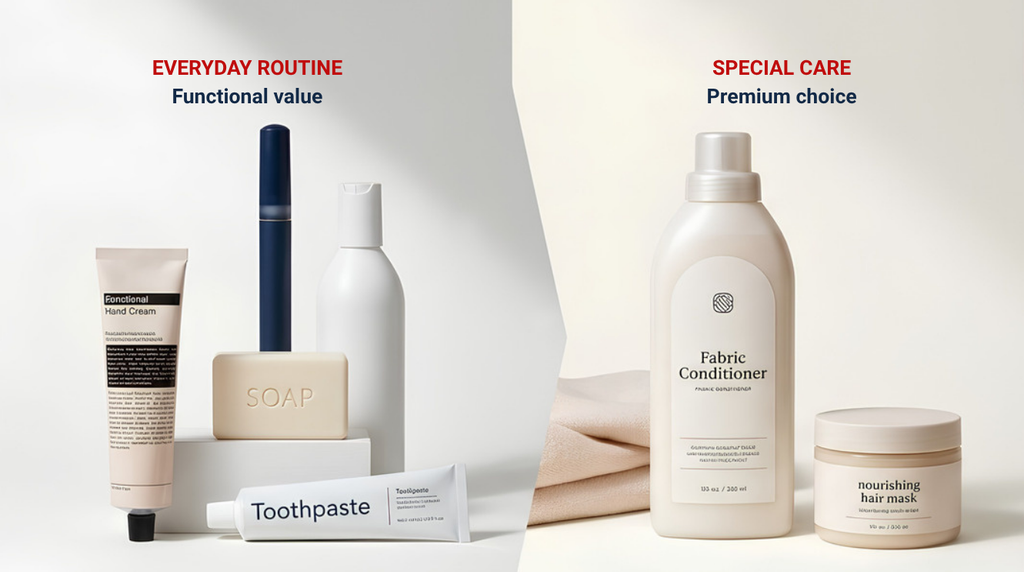
A similar dynamic can be observed in personal care. For an everyday hair-washing routine, a consumer may choose a reliable, affordable shampoo. Before an important social event, or when addressing a specific hair concern, the same individual may invest in a premium treatment promising superior results.
In chocolate, the distinction could be between a simple everyday treat, where value and taste dominate, versus a pampering and indulgence moment where packaging and perceived quality become part of the experience.
These examples are not intended to suggest that consumers have only recently started behaving this way. They illustrate a more important strategic question:
How can brands build meaningful differentiation and become the preferred choice across the different occasions in which they compete?
The implication is not that brands should focus only on occasions where consumers are naturally willing to pay a premium.
A strong brand can be relevant in everyday, functional and value-driven situations just as much as in premium or emotionally charged moments. The benefits that make it relevant, and the way those benefits need to be communicated, may differ.
The strategic challenge is not simply to identify when brands matter, but to understand how to make them matter across relevant occasions.
Not all occasions are created equal
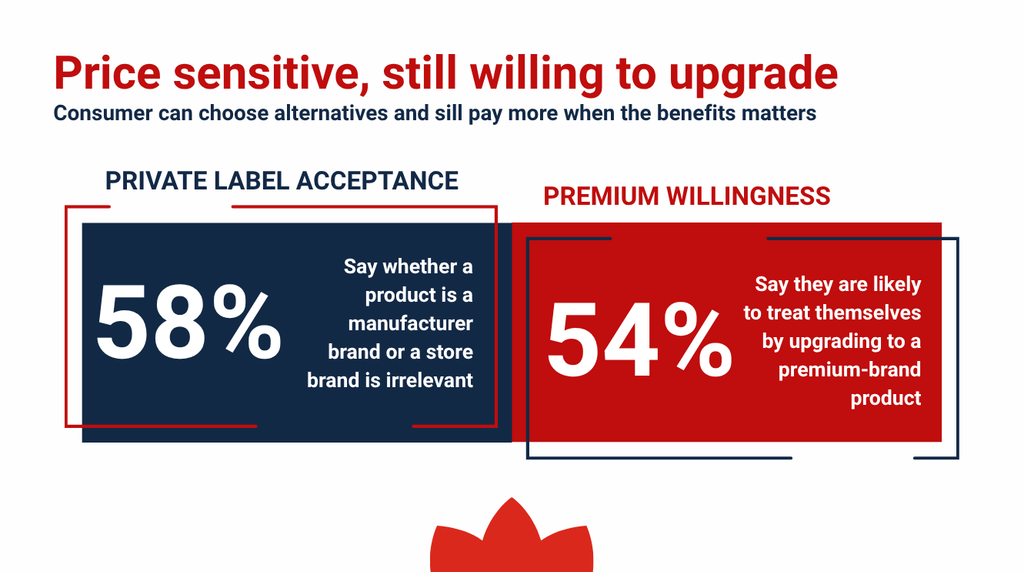
The growing acceptance of private label makes this question particularly relevant. According to NIQ, 58% of global consumers say that whether a product is a manufacturer brand or a store brand is irrelevant to them: they simply buy what they need.
At the same time, 54% say they are likely to treat themselves by upgrading to a premium-brand product.
These findings reveal an interesting tension. Consumers may be increasingly comfortable choosing alternatives to established brands, while remaining willing to pay more when they perceive a compelling benefit.
The growth of private label does not mean that some occasions are becoming inaccessible to manufacturer brands. It raises a more fundamental question: are brands doing enough to demonstrate why they deserve to be chosen?
In everyday, value-driven occasions, differentiation may come from reliable performance, consistent quality, convenience or superior value over time. In more specialized or emotionally engaging moments, reassurance, expertise, sensory pleasure or brand symbolism may become more important.
The winning proposition may therefore change with the occasion, but the importance of building differentiated and distinctive brands does not.
This is where mental availability becomes critical. A brand must be easy to recognize and recall when a relevant buying or usage need arises. Consistent distinctive assets and strong associations with relevant category entry points increase the likelihood that it comes to mind and is chosen.
The opportunity is not to concede certain occasions to private label, but to connect meaningful brand differentiation with the moments in which consumers make their choices.
From mapping occasions to understanding their economics
Many CPG organizations have already developed sophisticated demand-space frameworks, identifying the different motivations and occasions shaping category consumption.
But mapping demand spaces and translating them into strategic choices are two different things.
Knowing that consumers seek everyday convenience, functional performance, indulgence or reassurance is valuable. Understanding the commercial potential of each of these spaces is what makes the analysis actionable.
This requires answering a more demanding set of questions.
- How large is each occasion, and how frequently does it occur? How fast is it growing? What needs remain insufficiently addressed?
- What functional and emotional benefits matter most in each situation? How can a brand’s differentiation address those needs better than competing alternatives?
- How strongly is the brand associated with the occasion today? How can distinctive assets, consistent communication and relevant category entry points strengthen its mental availability?
- Where can the company create the greatest value through positioning, innovation, communication and activation—not only by defending current strengths, but by building relevance in new moments?
The objective is not simply to identify occasions where a brand already has an advantage, but also to uncover where differentiation and mental availability can create new growth opportunities.
Consider a snack manufacturer. A functional mid-morning occasion may offer significant volume potential but attract competition from protein bars, yogurts, fruit and nutritional beverages. An evening indulgence occasion may offer a different opportunity, with stronger emotional motivations and potentially higher willingness to pay.
The attractiveness of these spaces cannot be judged by consumption volume alone. Their profitability, growth potential, competitive intensity and fit with the manufacturer’s capabilities may differ substantially.
The real opportunity lies in moving from describing demand spaces to understanding their economics and determining where to compete.
This also challenges conventional category boundaries. A protein bar may compete less with other bars than with alternative solutions for convenient nourishment. A premium skincare mask may compete for consumers’ self-care spending with other wellness experiences.
Understanding these broader competitive dynamics can reveal growth opportunities that remain invisible when markets are defined exclusively through existing product categories.
Turning occasion insights into stronger brands and portfolios
For manufacturers, the next step is translating occasion understanding into stronger brands and more effective portfolio decisions.
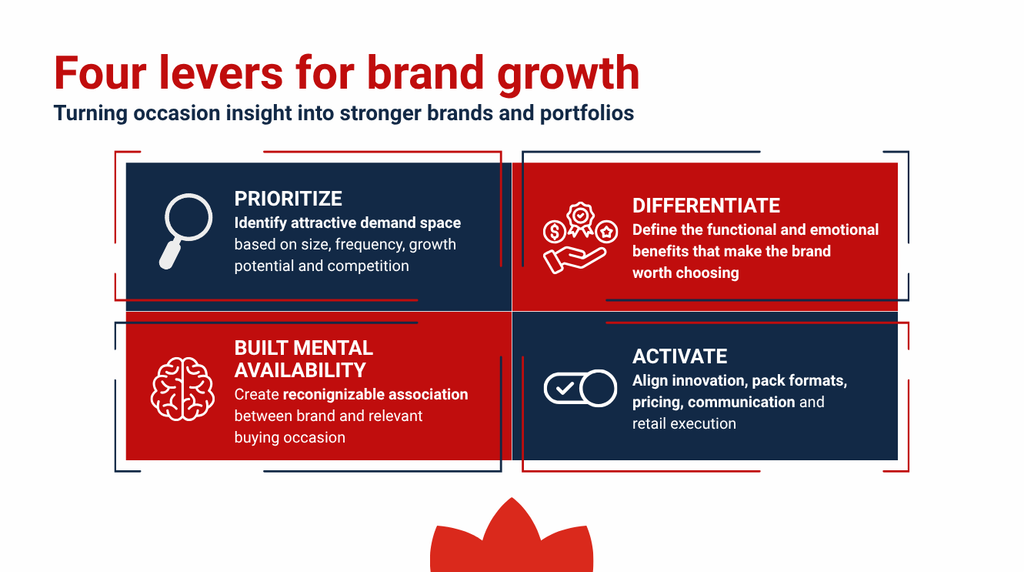
First, identify the most attractive demand spaces. Evaluate the size, frequency, growth potential and competitive dynamics of different occasions, recognizing both where brands are already strong and where they can create new opportunities.
Second, strengthen brand differentiation in the different spaces. Define what makes each brand worth choosing and how its functional and emotional benefits can address the needs arising across different occasions. A consistent brand positioning can support multiple consumption moments without requiring a different proposition for each one.
Third, build mental availability around the moments that matter. Brands need to create strong and recognizable associations with relevant category entry points, using consistent distinctive assets and communication to increase their chances of being recalled and chosen.
Fourth, translate these insights into portfolio and activation choices. Innovation, pack formats, pricing, communication and retail execution should reinforce the brand’s differentiation while making it relevant and accessible across priority occasions.
The ambition is not to create a separate brand or product for every occasion, but to develop brands that are distinctive, mentally available and relevant across a broad range of consumer needs.
Ultimately, the goal is to turn occasion understanding into stronger brand equity, broader relevance and sustainable growth.
The opportunity is in execution
The sophistication with which companies apply occasion-based thinking varies considerably.
Many large CPG multinationals have well-established demand-space frameworks, supported by significant investments in consumer research and analytics. Yet translating these insights consistently into portfolio management, innovation priorities and commercial execution can remain challenging, particularly across different brands, functions and markets.
For medium-sized businesses, the challenge may be different.
Occasion-based thinking may be understood conceptually but less systematically embedded in strategic planning. Limited research resources, historical brand structures or a strong focus on existing product categories can make it harder to identify and prioritize opportunities beyond the current portfolio.
The good news is that unlocking the value of occasions does not necessarily require massive segmentation studies. Focused consumer research, behavioral insights and a pragmatic evaluation of demand spaces can provide a powerful basis for prioritizing growth opportunities.
Ultimately, competitive advantage comes not just from understanding the occasion, but from knowing how to build distinctive brand meaning, make the brand mentally available when needs arise, and consistently demonstrate its value.
It comes from knowing which moments matter most, understanding the role brands can play in them, and building the right portfolio to win.
For CPG companies navigating an increasingly fluid marketplace, that may be one of the most valuable ways to unlock the next wave of growth.
At Sevendots, we help CPG companies turn consumer and occasion insights into stronger brands and actionable growth strategies.
Combining deep consumer understanding with extensive senior strategy, marketing and commercial expertise gained across leading CPG companies, we help businesses identify attractive demand spaces, sharpen brand differentiation, build relevance across occasions and translate these opportunities into compelling portfolios and activation plans.
Reach out to us if you are looking to strengthen your brands’ distinctiveness and mental availability, make their value clear in the moments that matter, and unlock sustainable, profitable growth.
