Brand Growth, Business Strategy 31 August 2026
Unlocking CPG Growth In The Age of AI
The consumer decision has moved off the shelf and into AI mediated moments.
Traditional data shows a brand what happened, not why it happened, and where the next point of growth is forming.
We have built a CPG Growth Playbook ready for the AI age. The framework is L.O.A.L. - Listen. Observe, Act. Learn.
This piece introduces the model. Future pieces go deeper into each movement of the loop along with real-life examples.
6 minute read

Consumer decision cycle has changed in fundamental ways. Two forces are driving this shift:
1. From Traditional Search to AI-Mediated Discovery
2. The “Experience Economy”
1. From Traditional Search to AI-Mediated Discovery
Until recently, consumers used to discover brands at a shelf, in a search bar, through linear advertising, against a list of functional attributes: price, size, flavor. That world is replaced by a new ecosystem at a pace that most brands are finding hard to keep up.
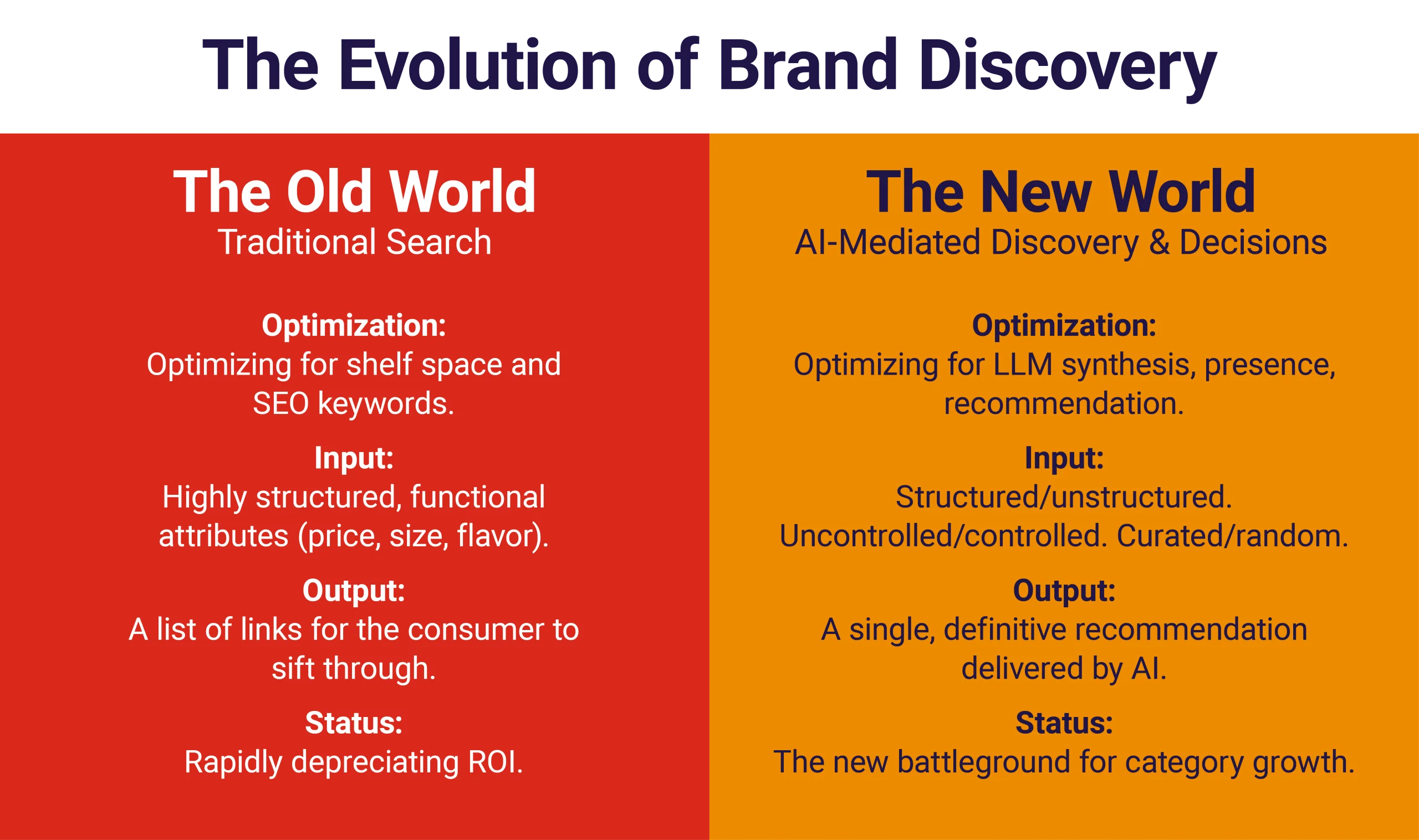
Consumers now discover, compare, and decide inside AI mediated moments, shaped by reviews, social conversation, and creator content. Consumer decision is often already forming before a brand ever gets a chance to present its case.
Segment: Beauty & Personal Care
A real situation: A consumer no longer searches for “best anti-aging cream” or scrolls through retail category pages. Instead, they upload a high-resolution selfie to an AI skincare assistant or prompt an LLM: “I am 34, living in an arid climate with high pollution, dealing with postpartum hormonal breakouts, and using a prescription retinoid. Build me a morning routine under $90 that won’t compromise my skin barrier.”

The disruption: The AI processes the request by cross-referencing ingredients, user forums, and clinical study data. It delivers a strict, three-product regimen spanning completely different brands. Traditional “brand loyalty” or paid eye-level shelf space is bypassed entirely. The AI dictates the basket based purely on ecosystem signals.
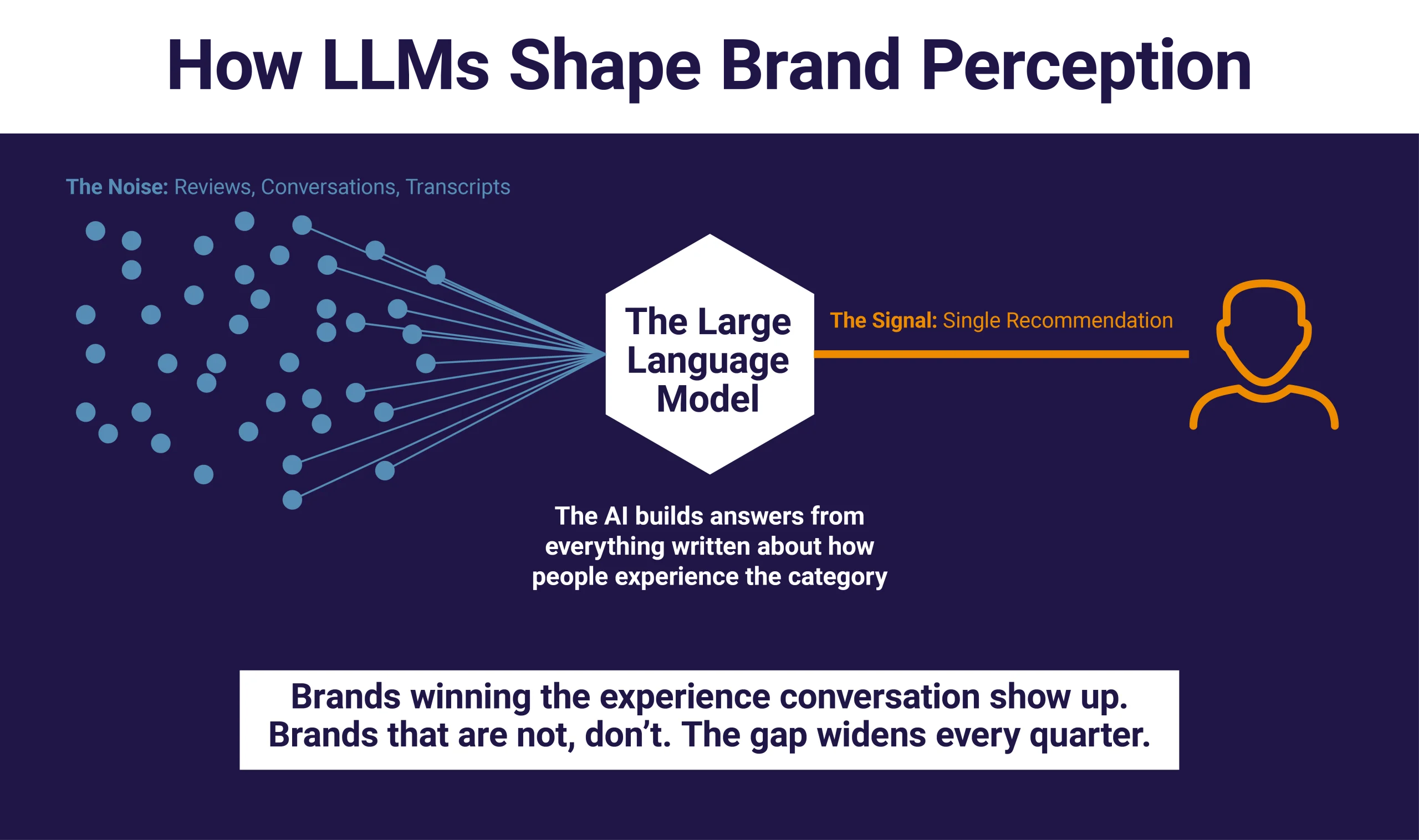
Data from PYMNTS.com indicates that nearly 20% of U.S. adults begin retail research with AI, with a vast majority of those users bypassing traditional search engines entirely. [PYMNTS]
53% of shoppers try new brands exclusively because an AI tool suggested them, heavily collapsing the traditional linear awareness to consideration funnel. [Conveo]
2. The “Experience Economy”
Even if you have figured out a way to influence what LLMs feedback to consumers and have your brand present in the recommendations, there is another new challenge that you must deal with.
The experience economy is growing at an unprecedented rate. More than functional attributes, consumers now rate a brand based on how they experience it in chaotic and messy lived moments. And that is what they feed back to the AI models via reviews, social media, and other feedback channels, which is what the LLMs use next time a consumer searches that category. Feedback reviews are one of many data points continuously ingested by LLMs as they iterate for the next recommendation model. In the next article we will go deeper into what those sources of inputs are for LLMs. We will also dwell on how close or far are these brand presentations with the way brands themselves want to be represented. This discussion will not only talk to the challenges faced by content managers, but also CMOs.
Segment: Beauty & Personal Care
A real situation: A premium hair serum promises “90% less breakage.” However, the consumer’s rating of the brand is heavily dictated by the messy, lived experience: the heavy glass bottle slips easily in wet hands, the pump squirts unevenly, or the scent clashes with their perfume.

The disruption: Consumers value how a routine reduces stress and feels to use over basic laboratory outcome claims. If they put feedback in online reviews or social media, then this becomes the very data LLMs ingest to either recommend or filter out the brand for the next buyer. If they don’t post it, it is still adverse for brands, as that key moment becomes the reason, they will abandon the brand, and brands would remain completely blind.
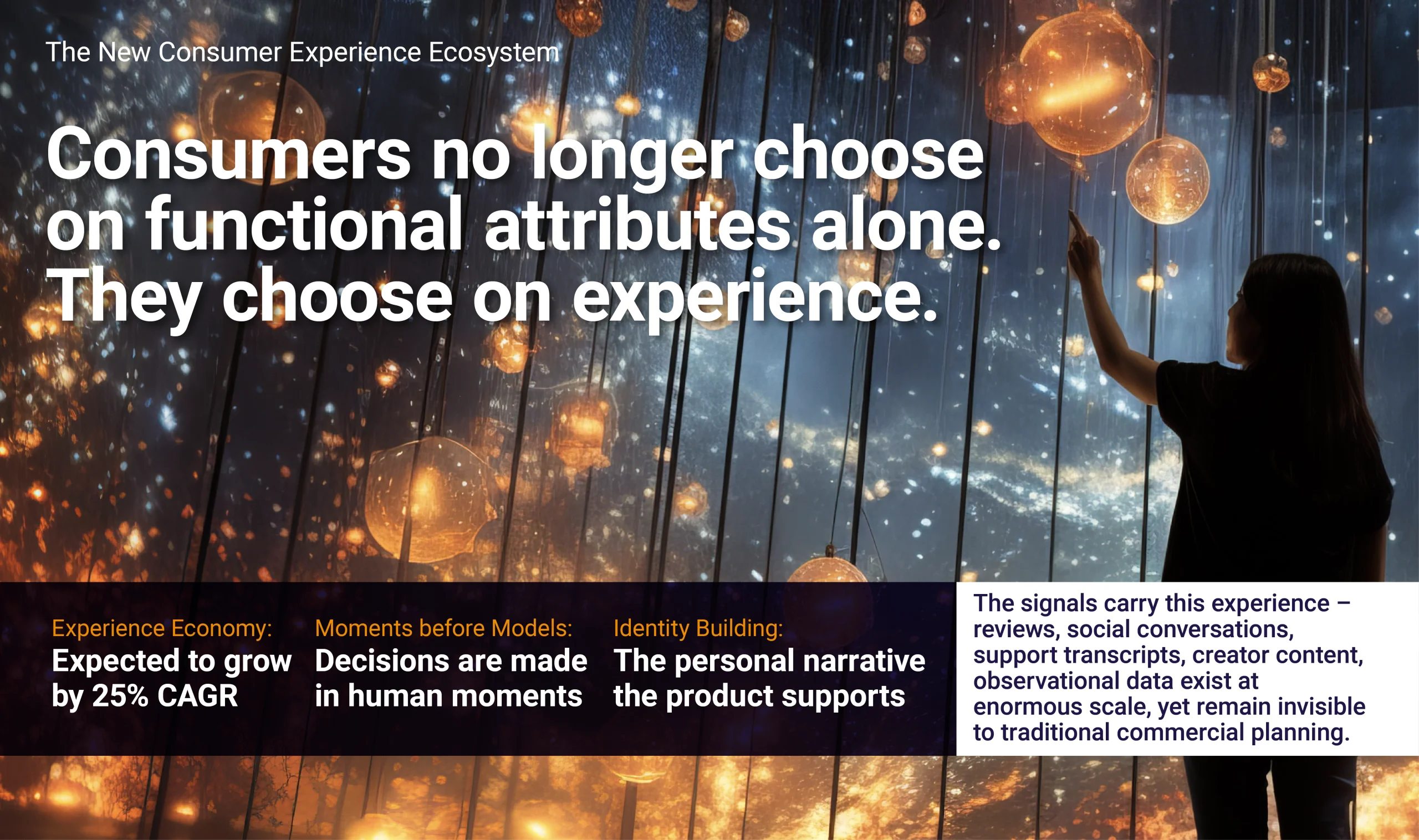
Makai’s recent analysis of the modern experience economy highlights that immersive moments actively shape consumer purchasing behavior long before the final transaction actually occurs. [MAKAI]
Industry analysts at Brandwatch identified the “experience economy reshaping shopping” as one of the top five CPG consumer shifts for 2026. They note that memorable in-store moments now influence repeat business just as much as the physical product itself. [Brandwatch]
Senior Partner at Sevendots talked about “Small Positive Experiences Build Big Businesses” highlighting that brands are being built, and broken, through thousands of small, often invisible interactions that shape trust, habit, and memory over time. [SEVENDOTS]
Signals are all around us
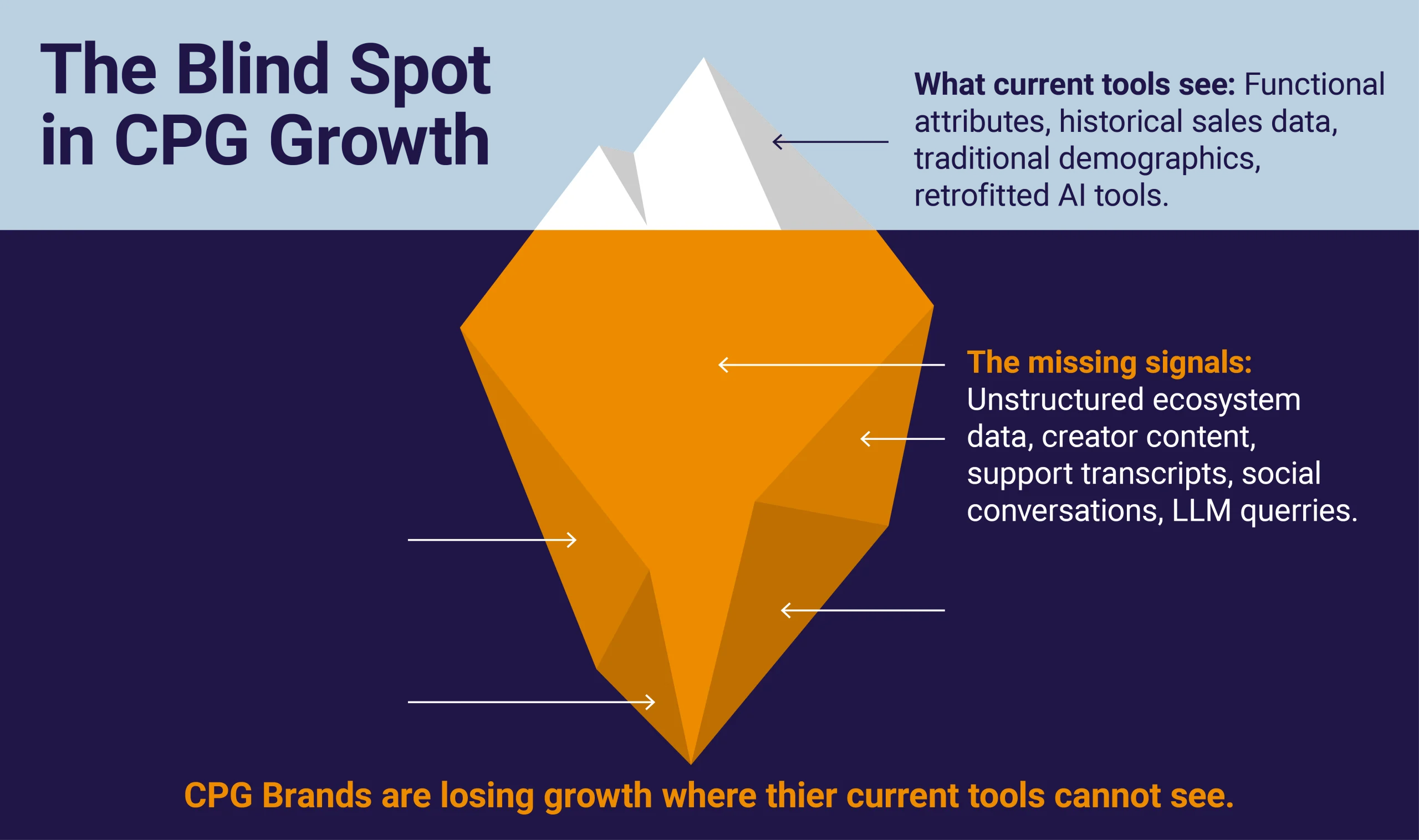
The signals that carry this new decision layer exist all around us, at massive scale, and are constantly generating new data. They are also entirely invisible to traditional commercial planning. Functional attributes, historical sales data, old recall-based and static survey research, and traditional demographic splits tell a brand what happened in the past. They do not tell a brand why consumers behaved the way they did and where the next percentage point of growth is forming, or why it is slipping away.
That is the blind spot. CPG brands are losing growth because they are not effectively leveraging the data that matters most now. This data is sitting in unstructured, ecosystem level signal: what people say unprompted, why they make certain decisions in the moment, what they search for before they decide, what they tell an AI assistant when they think no one from the brand is listening.
This is the problem we are going to solve for the CPG clients. The CPG Growth Playbook is built around a framework and robust research grade human architected AI tools that will help CPG clients unlock new growth potential, faster.
We will show, with AI tools and real-life use cases, how brands can unlock new growth opportunities.
The Growth Model in the age of AI
Commercial momentum is created when a brand continuously reads what is changing, understands why it is changing, acts on it, and learns from how consumers respond. The answer is a whole new playbook for continuous commercial momentum. The playbook shows brands how to recognize the moments and ecosystems where consumer decisions are being made today. What is driving those decisions and how to influence them.
The core engine of the playbook is our growth model fit for the AI age. We will run live data through the model and identify ways for CPG companies to leverage our knowledge and insights to build commercial momentum.
Our model turns that into a continuous flywheel: Listen. Observe. Act. Learn.
Each cycle creates new knowledge that makes the next cycle sharper and the next commercial decision better.
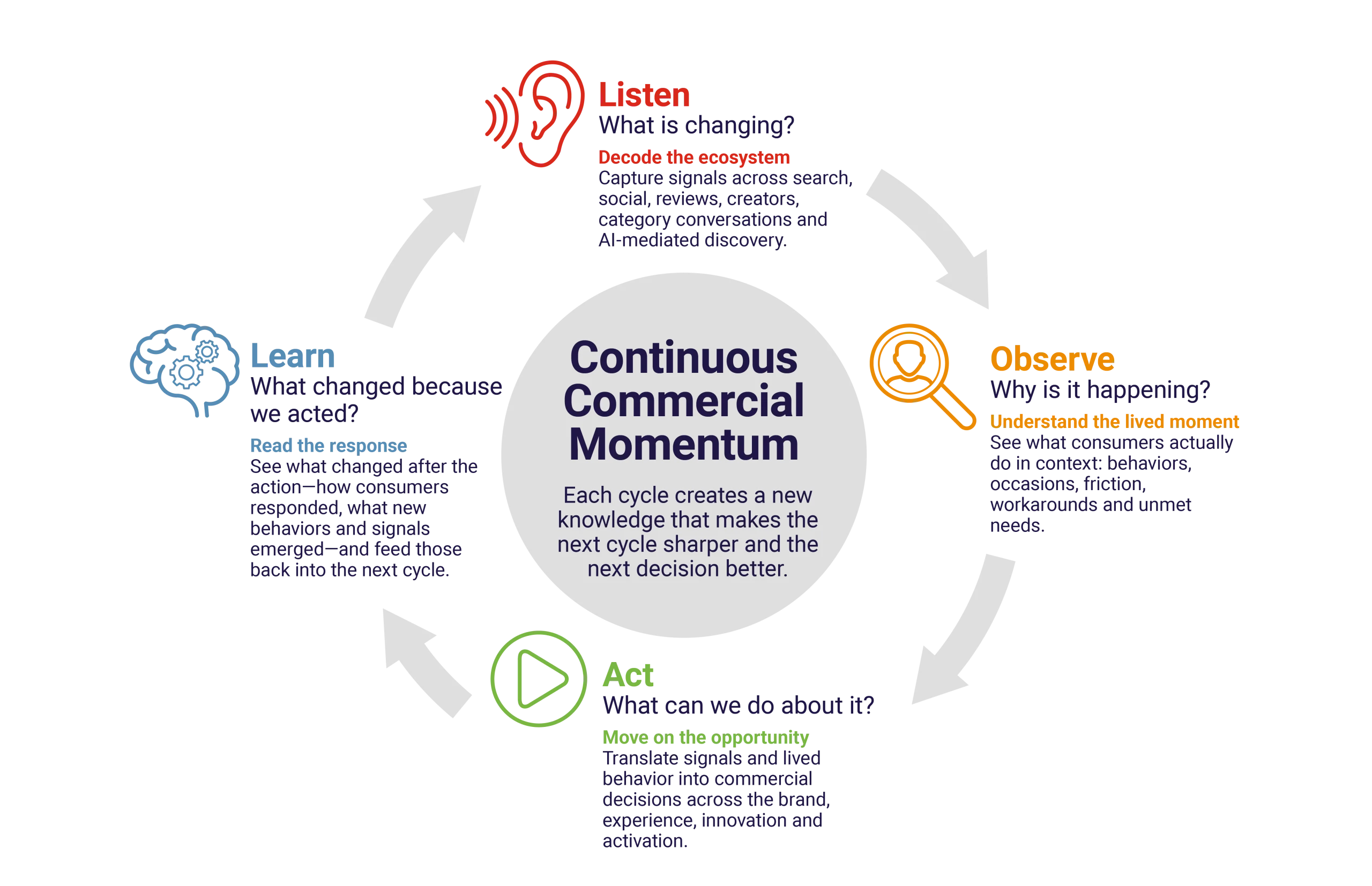
LISTEN — Decode the ecosystem
Capture emerging signals across search, social, reviews, creators, category conversations and AI-mediated discovery.
OBSERVE — Understand the lived moment
See what consumers actually do in context: behaviors, occasions, friction, workarounds and unmet needs.
ACT — Move on the opportunity
Translate signals and lived behavior into commercial decisions across the brand, experience, innovation and activation.
LEARN — Read the response
See what changed after the action—how consumers responded, what new behaviours and signals emerged, and feed those back into the next cycle.
What’s next?
Subscribe to our substack channel (see link below) to access additional content on the AI potential to unlock growth.
What to expect in our Tier 2:
Tier 2 article will dwell into the details of how these systems are working. We will provide specific examples from real AI platforms of how brands are showing up on search and what is driving those results. We will also explore examples form actual projects to show how experiences reveal hidden needs and behaviors that brands were unaware of.
Free readers get our latest thinking on CPG growth. Paid subscribers get
the frameworks, case studies and tools to put that thinking into action.
→ Become a Growth Builders subscriber